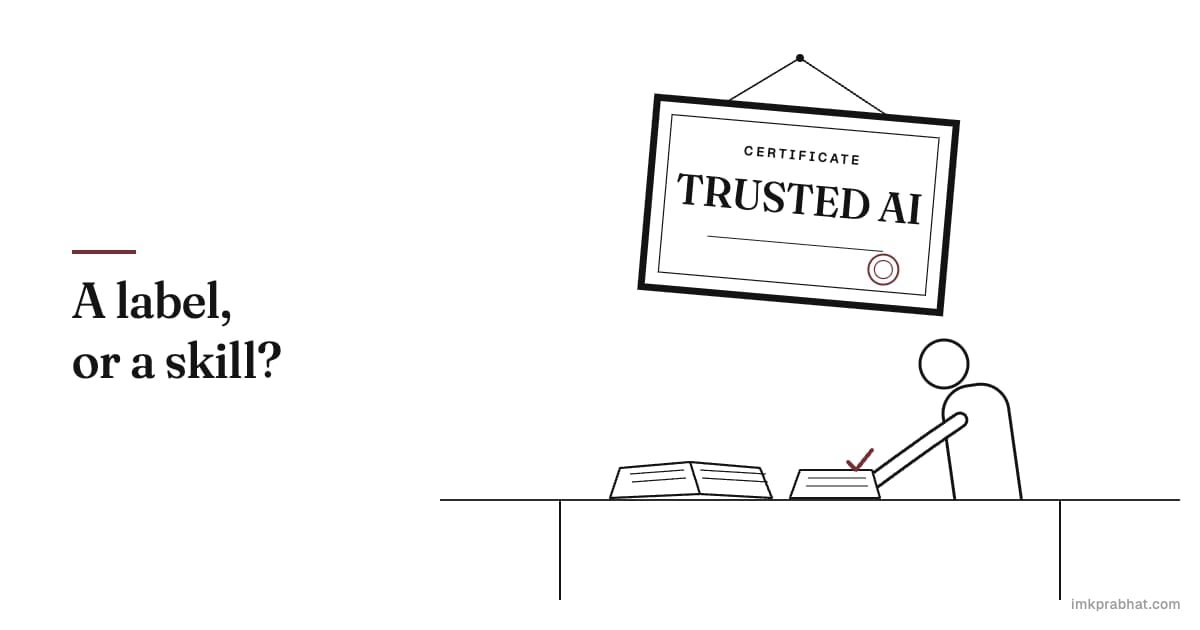
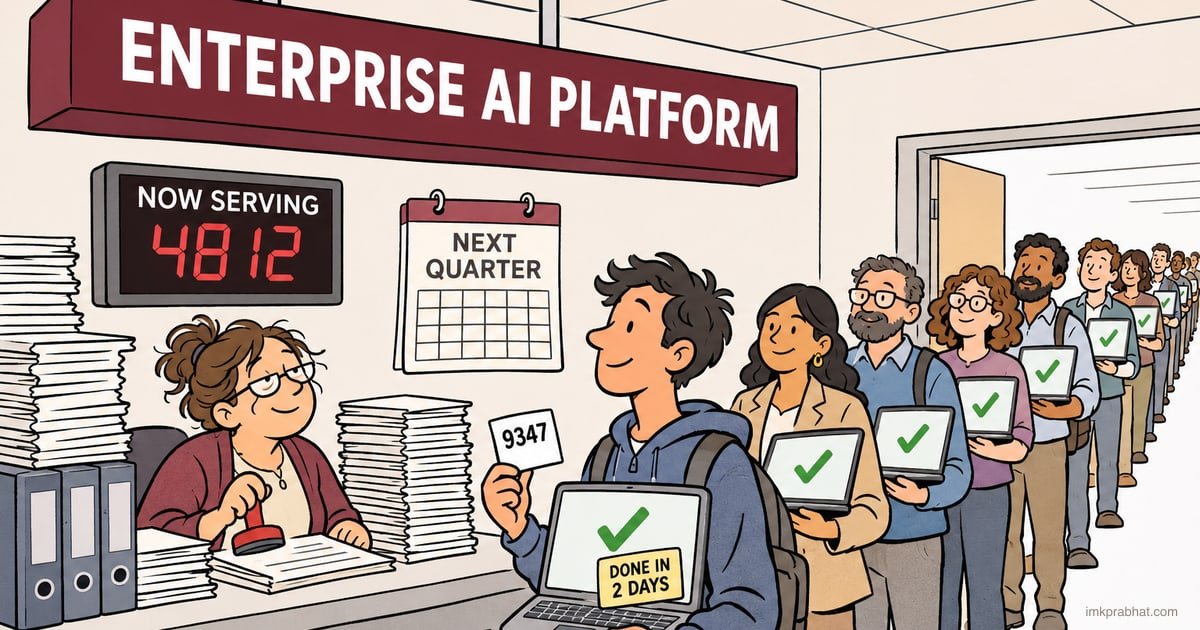
The day you build something
Most people now use AI, and very few have made anything with it. The gap is not code. It is confidence, and a weekend can close it.
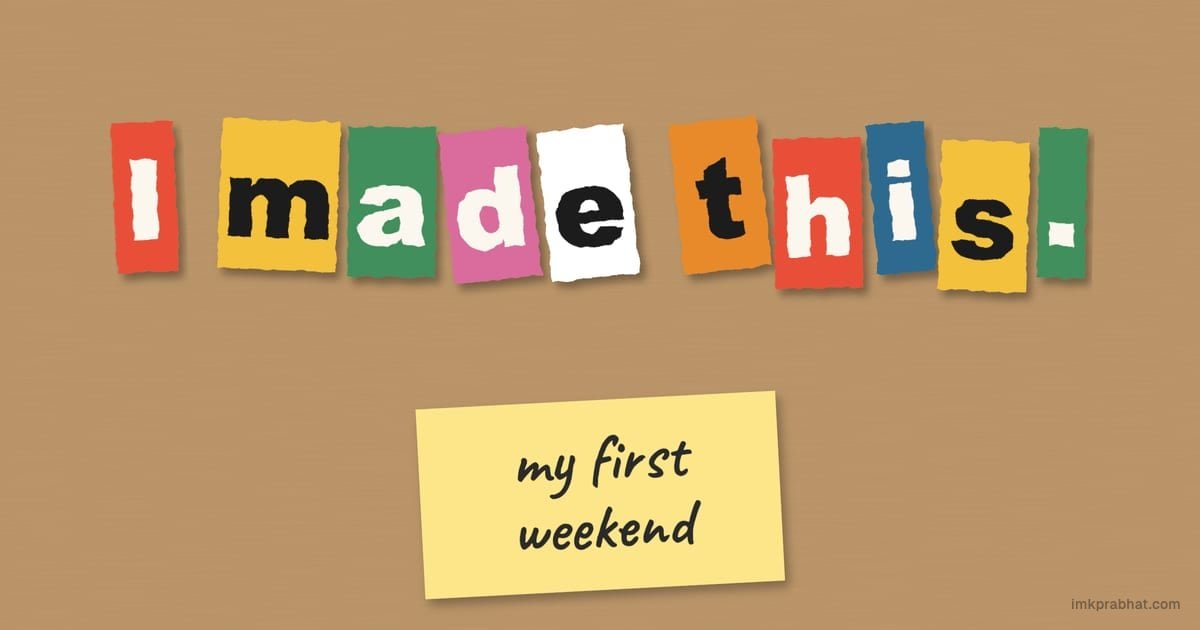
Most people I meet now use AI every day, and very few of them have built anything with it. I think that is the most important gap in AI right now, more important than any model or any law, and it is not a gap in code. It is a gap in confidence, it closes faster than people expect, and the people who cross it start to use everything else differently.
I see this up close in the AIforAll Global community. Our members work with the newest AI tools as they appear, and something has changed that I did not quite expect. People now finish in a weekend things that used to take them weeks. They are not all engineers, and they are not working through the night; they simply decided, on a quiet Saturday afternoon, to make something instead of asking for it.
Using is not making
The European Commission’s researchers found that AI tools are now part of everyday work for around 30% of workers in the EU, and in my experience far fewer have ever built anything with them. There is nothing wrong with using AI the way most of us do. You ask for a summary, a draft or an idea, it gives you one, and you carry on with your day.
It is a little like being driven around a new city: you arrive everywhere, and you could not find your way back on your own.
A lot of everyday use is also less ambitious than we admit. I have watched capable people spend five minutes asking a chatbot for an email they could have written themselves in four, which is a fine hobby but not quite a revolution.
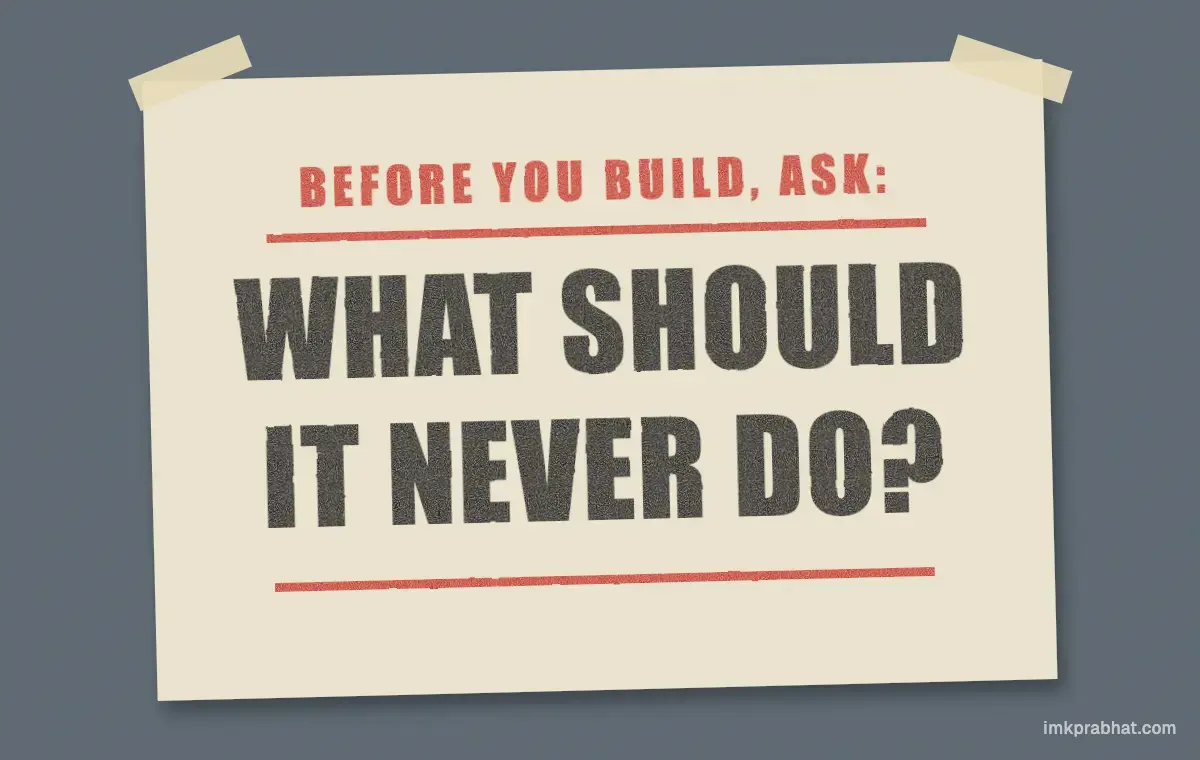
Making something is different. The moment you try to build even a small tool, you have to decide what it is for, what it should never do, and how you will know when it is wrong. Nobody gives you those answers in advance, and the first version always gets at least one of them wrong.
What a weekend does to people
When someone in our community builds their first real thing, a few things change at once, and none of them is technical.
They stop asking whether AI can do something and start asking whether it should, and for whom. They become far better at spotting a confident wrong answer, because they have seen their own tool produce one. And they talk about AI differently afterwards: less like fans, and more like people who know where the edges are.
That is why I think AI literacy, knowing when to trust the answer, cannot be taught only from the front of a room.
You understand a tool the day you build something with it.
I have also noticed that the people who build are kinder about other people’s mistakes with AI. Once you have been fooled by your own tool, you stop assuming that everyone who was fooled was careless.
The walls I chose
I built ainsteins, a learning assistant for schools, and the decisions that shaped it were mostly about what it should refuse to do. I wanted the power of AI inside the walls of a class, taught the way a good teacher teaches. It also has no streaks, no badges and no leaderboard, because a child should open it to understand something, not to collect points.
None of those are technical choices. They are the choices a good teacher would make, and they are the same kind of choice a nurse or a shopkeeper makes when building a first small tool for their own work: what is this for, and what should it never do? I have come to think the boundary is not a limit on learning but the place where it happens.
Why people do not start
If building is this useful, why do so few people try? In my experience, the reasons are almost never about skill.
Some people believe building is for engineers and that they would need to learn programming first. Usually they would not: the hard part now is deciding what the thing should do, a skill they already have from their own job. Others are afraid of looking foolish, and it is much easier to defend a plan than to show something unfinished and invite people to poke at it. And some never get an afternoon in which nobody needs them.
The fix for all three is the same: a small first project, with clear walls around it. Not “build an AI strategy”, but “build one tool that helps with one part of your own work, for yourself, by Sunday”. A small boundary makes it safe to try and easy to finish, and I have yet to meet anyone who stopped after their first finished tool.
What I would build first
If you have never built anything with AI, start with a problem you already know too well.
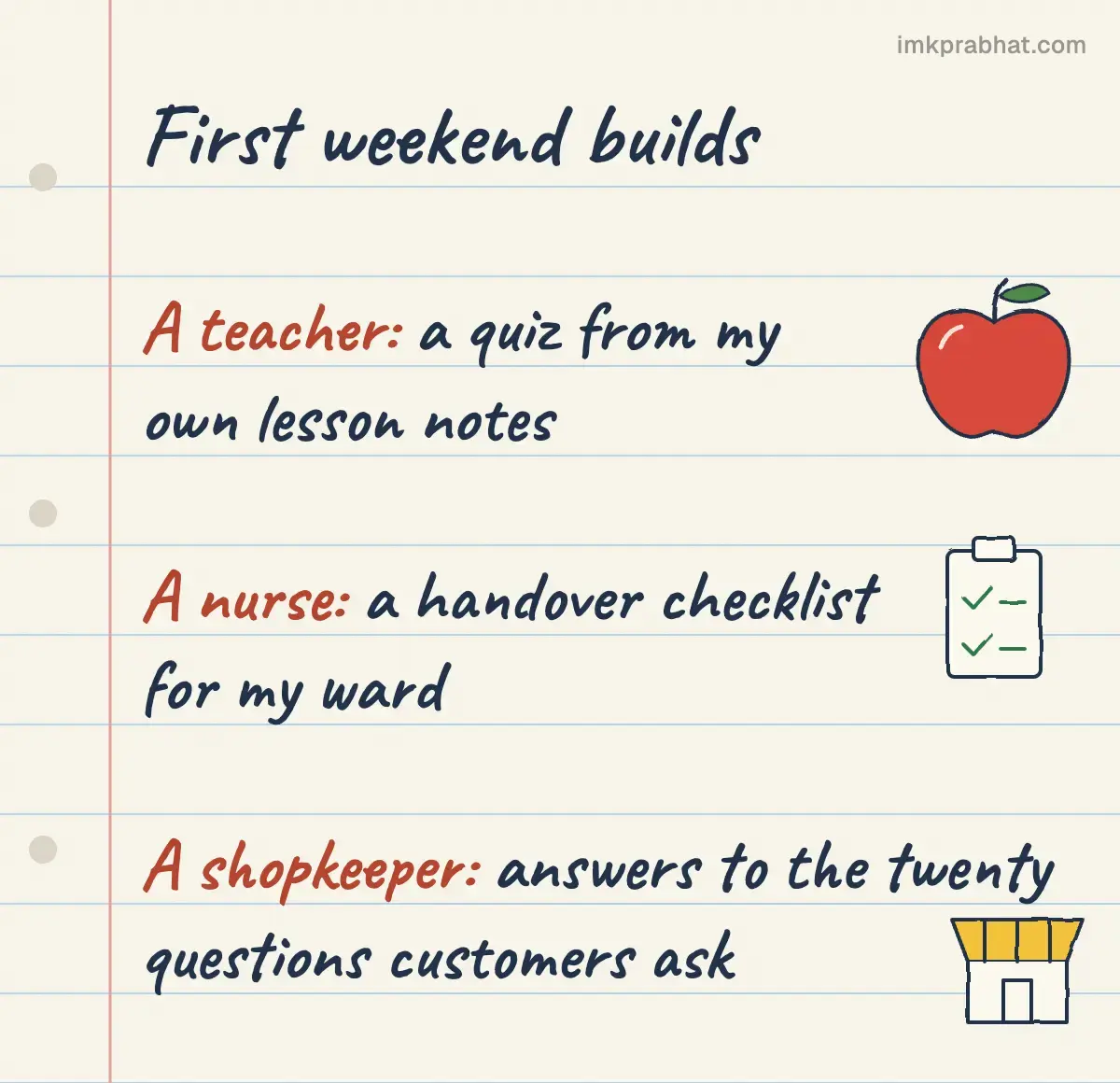
None of these needs a budget or permission. Each one sits inside a job the person already understands, so they will know straight away when the tool gets something wrong.
When the first version works, show it to one colleague before you show it to anyone else. They will find the problem you missed in about thirty seconds, and you will learn more from that half minute than from a whole week of reading about AI.
Where to begin
I started AIforAll Global so that AI would open the same door for everyone that education once opened for me, and in my experience building is where that door actually opens. That is why every AIforAll Global programme, short or long, ends the same way: with people building something of their own and taking it home. Our course marketplace is coming soon; until then, you do not need to wait for us.
Pick one small, annoying task in your own work, give yourself a weekend, and build something that helps with it. It will be rough, and that is fine. You understand a tool the day you build something with it.